The 5 Steps That Improved My Sourdough Bread
Sourdough has a way of humbling you. You can follow the same recipe twice and get completely different results. For a long time I assumed that was just the nature of it — until I started paying closer attention to a few specific things. Here’s what actually moved the needle for me.
1. Tracking the start time of bulk fermentation
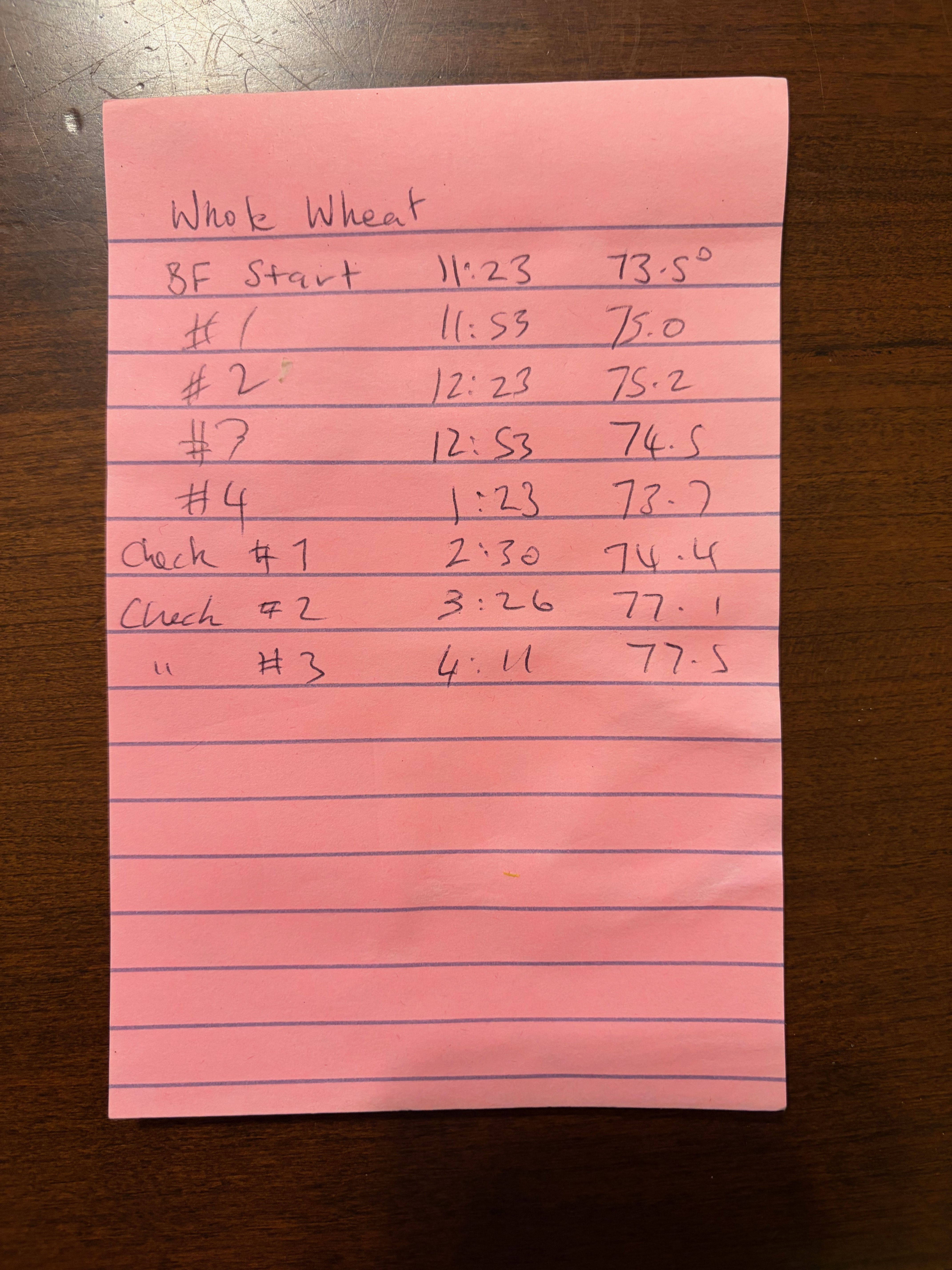
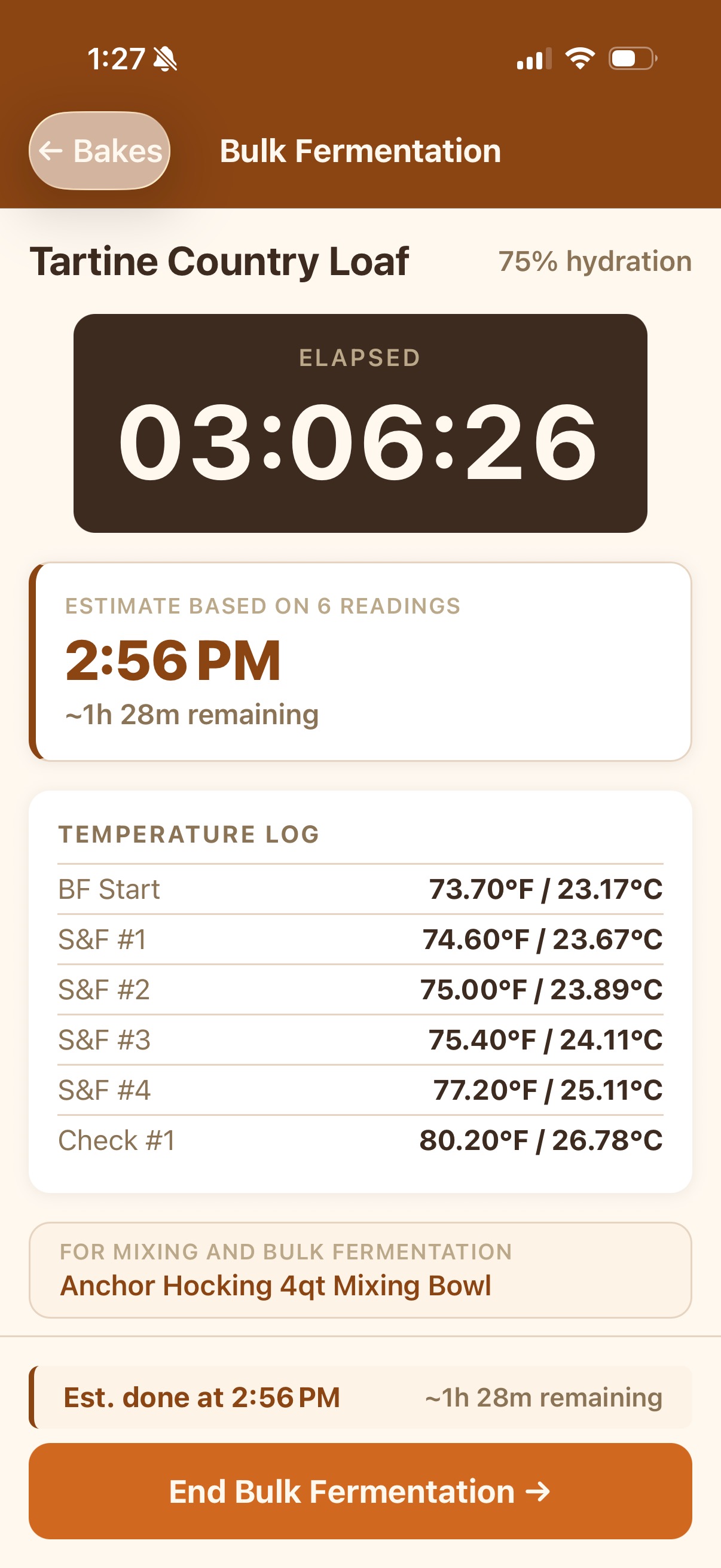
It sounds obvious, but I wasn’t doing it consistently. I’d mix the dough, get distracted, and lose track of when bulk actually began. Once I started logging the exact start time, I had a real baseline to work from. Everything else depends on it.
2. Taking the dough temperature at each stretch and fold
Bulk fermentation is driven by temperature, not time. A dough at 72°F and a dough at 78°F are fermenting at completely different rates — even if the clock says the same thing. Taking a temperature reading at each stretch and fold gave me a much clearer picture of what was actually happening in the bowl and let me adjust my expectations accordingly.
3. Using the aliquot method
Taking a small sample of dough in a straight-sided jar at the start of bulk and watching it rise was a game changer. Instead of guessing whether my bulk was done based on feel or time, I had a visual reference I could check at a glance. Seeing a clear 50–75% rise in the jar gave me the confidence to move to shaping at the right moment.
The key is using something with straight, vertical sides so the rise is easy to read. I use the Anchor Hocking 5-Ounce Measuring Glass — it’s cheap, widely available, and the straight sides and graduations make it perfect for this.
4. Using my starter more often
The more I baked, the stronger my starter got. Regular feedings and consistent use built up a culture that was more active and more predictable. My early struggles with flat, dense loaves weren’t just technique — my starter wasn’t ready. Baking frequently fixed that without me doing anything special.
5. Adding ice to the covered bake
Steam in the first part of the bake keeps the crust soft and extensible long enough for the loaf to spring up fully in the oven. I add a few ice cubes to the Dutch oven alongside the dough before putting the lid on — as they melt they release steam gradually, which gives better oven spring and a more open ear than a dry bake.
One important note: make sure your dough is on parchment paper before it goes in. The ice needs to sit with the parcment paper between the it and the dough. This prevents the melt water from interfering with the base of the loaf.
None of these are dramatic changes. But together they turned sourdough from something I was guessing at into something I could actually understand and repeat.
My sourdough is by no means perfect — it’s still very much a work in progress. But that’s part of what makes it interesting. Having a record of every bake, with temperatures, timings, and notes, means each loaf teaches me something. That’s exactly what Levain Log is built for.